Are You Writing for People — or for the AI That Will Read You Later?
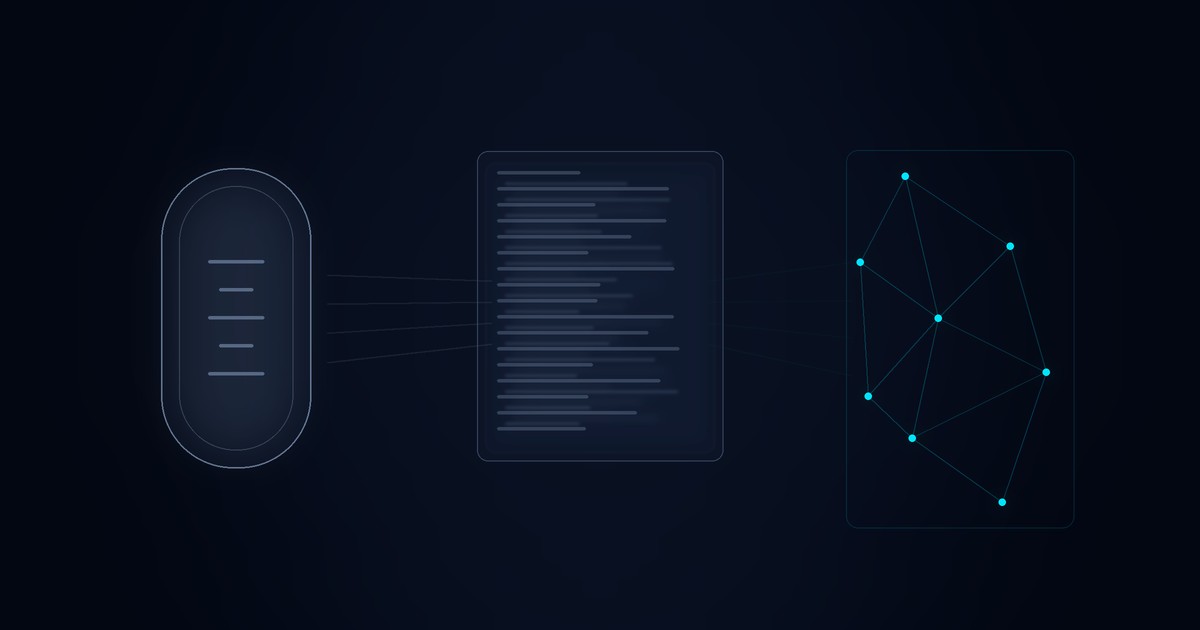
For years, social platforms trained us to believe that attention was evidence of value.
Likes meant an idea mattered. Followers implied authority. Comments told us the audience was listening.
But what if those signals become secondary? What if one of the most important readers of your professional work is not scrolling a feed today, but analyzing your body of work years from now?
We learned to measure attention
The training was effective, and mostly invisible. Post something specific and operational, and it lands quietly. Post something broad and affirming, and it travels. Over time you learn which one the system rewards, and the lesson shapes what you write next.
None of that makes engagement worthless. A thoughtful comment from someone who has solved the same problem is real signal. A post that spreads because it named something people recognized is real signal too.
The problem is that we let a partial measure become the whole scoreboard. Attention tells you that something was seen. It does not tell you whether it was right, whether it held up, or whether the person who wrote it understood the subject.
The audience is quietly expanding
AI-assisted research, recruiting, procurement, advisory, and discovery tools are becoming part of how many organizations investigate a subject or a person. That is already true in ordinary ways, and it is likely to become more capable.
Here is what interests me about that shift. A human reader will typically see one recent post, maybe two. Attention is scarce and recency wins.
A system may examine considerably more: articles, comments, presentations, technical explanations, predictions, corrections, public decisions, changes in viewpoint, and the context someone added when sharing another person's work. Not every system will have access to all of it, and none of it is guaranteed. But the range of what could be examined is wider than what a busy human reader will ever get to.
That changes the arithmetic of what is worth publishing.
You may not control the sentence an AI system generates about you. You can control the body of work that sentence is generated from.
Popularity and professional value are not the same
Consider two hypothetical cases.
In the first, a technical leader publishes a detailed explanation of why a proof of concept failed in production. It covers the assumptions that did not hold, the constraint nobody modeled, and what they would test differently. It is specific, operational, and not sensational, so it receives very little engagement. Years later, an AI-assisted research system surfaces it because another organization is facing the same problem and describing it in similar terms.
In the second, a post about transformation, innovation, and disruption collects thousands of reactions. It is well written and genuinely enjoyable to read. It also contains no examples, no boundaries, no evidence, and no visible reasoning — nothing from which a serious reader, or a future system, could assess whether the author has actually done the work.
These are illustrations, not predictions. And they are not opposites. Plenty of substantive work is also popular, and the most useful thing you write may well be the thing that travels. The narrower point is that popularity alone is incomplete evidence of expertise, and we have been treating it as though it were sufficient.
Your public work becomes evidence
We have spent years optimizing for human attention.
We learned how to earn likes.
We learned how to increase followers.
We learned how to generate comments.
But an AI system may evaluate something different.
It may compare years of published thinking.
It may identify whether conclusions follow from evidence.
It may observe whether someone corrects mistakes.
It may distinguish demonstrated expertise from expertise that is merely claimed.
Maybe the audience we should be writing for has quietly expanded.
From a public body of work, a system may be able to infer patterns: consistency across time, intellectual honesty, willingness to revise a position, depth in a particular area, clarity of thought, how conclusions are supported, and whether someone's views change responsibly as evidence changes.
Those inferences are incomplete, and it matters to say so plainly.
Discovery and judgment are different problems
It helps to separate four things we tend to blur together.
Attention is what generates likes, comments, shares, and follower growth. Substance is whether the work contains useful reasoning, evidence, specificity, and original thought. Discovery is whether a system can find and surface a person whose work is relevant to a problem. Judgment is whether that person should be trusted, hired, funded, recommended, or given responsibility.
Discovery and judgment are different problems. AI may increasingly influence discovery and context. Consequential judgment remains a human responsibility.
No system can fully determine integrity under pressure, accountability during failure, ethics in private decisions, how someone treats colleagues, trustworthiness in a difficult engagement, or whether a person will recommend less than they could sell you. Those are demonstrated over time, between people, usually when something is going wrong.
In 25 years in enterprise technology, the people I have most wanted in the room were not the ones with the largest audience. They were the ones who turned out to be right when being right was inconvenient. No analysis of published work would have told me that in advance.
Build a record worth interpreting
The practical response is not to write for machines, and certainly not to manipulate them. It is closer to the opposite.
Be specific about what you did and did not do. Date your claims so they can age honestly. Show the reasoning, not only the conclusion. State the limits of what you know. Publish the correction when you get something wrong, because a visible correction is evidence of judgment in a way that a confident assertion never is.
That advice would have been good in 2006. It is simply becoming more consequential.
The question that remains
Maybe we have been asking the wrong question. We keep asking how to gain more followers. Perhaps we should also ask whether we are creating a body of work worth interpreting.
Your next opportunity may not begin with someone scrolling your profile. It may begin when an AI-assisted system is asked to identify who understands a particular problem, and your public work becomes part of the answer.
If an AI system had to explain your knowledge, judgment, and professional value using only what you have published, would it get you right?
And if it would not, what should you begin documenting differently today?
If you're thinking about how technical expertise gets discovered, evaluated, and represented — or about enterprise AI and infrastructure more generally — I'm always up for the conversation.
Connect with me: mosesacosta.ai · moecloudgroup.com · LinkedIn · moses@mosesacosta.ai
Author: Moses Acosta is Senior Vice President, Global Next Generation Technology Engineering at Citi, where he has worked since March 2001. He has 25+ years in enterprise technology, is an active contributing member of the Dell, HPE, Lenovo, and Cisco technology advisory councils, and builds MoeCloud as an AI-native operations platform with governance at its core.